BEVERLY OIL BOILER SERVICE

Oil Boiler Repair in Beverly, MA

Oil systems fail in their own language: burner, nozzle, fuel supply, tank.

✓ Oil-burner diagnostics✓ Tank & fuel-supply checks✓ a phone conversation about symptoms

General inquiries: 7 AM–7 PM · Emergency calls: 24/7 · (888) 766-1474

Beverly’s oil reality

Fuel type varies by property. Check whether the boiler uses gas, oil, propane, or electricity before calling; the fuel source affects the appropriate diagnostic steps.

The oil homes cluster where the gas mains never justified the run: downtown colonials and multi-families with cast-iron boilers installed when oil was the modern fuel, older capes and ranches in the neighborhoods, and the larger homes toward Beverly Farms and Prides Crossing where the heating load made oil the practical choice. These are overwhelmingly hot-water systems with above-ground tanks in the basement or garage — and that tank, sitting in salt air, is half the service story.

The practical consequence: oil is a core competency here, not a sideline. Burner, nozzle, electrode, pump, filter, tank, and fuel line are one connected system, and a Beverly oil call gets all of it checked — including the corrosion pass over the tank that inland oil markets skip.

Oil Boiler Repair in Beverly, MA

How your oil burner works

Sixty seconds of mechanics that make the faults make sense.

An oil burner does four things in about ten seconds. The fuel pump draws oil from the tank through the filter and pressurizes it. The nozzle atomizes that oil into a fine mist. The electrodes throw a spark that lights the mist. And the flame retention head shapes the fire so it burns clean against the chamber. If any step fails — weak pump, worn nozzle, mis-set electrodes, poor draft — the cad cell (the flame eye) sees no proper flame and the primary control locks the burner out rather than pump raw fuel into the chamber.

That lockout is the single most misunderstood moment in oil heat. The red reset button is not a fix — it is a second chance the safety system grants once. Understanding the four steps is what lets the triage ask the right questions: when did it last run, what changed, is there oil in the tank, any smell near the tank.

Oil Boiler Repair in Beverly, MA

Fault map: what the burner is telling you

Read the symptom before you touch the reset.

  • Burner won’t fire at all — dead primary control, failed transformer, or no power to the burner circuit; check the emergency switch and breaker first
  • Lockout with the red button lit — the cad cell saw no flame: worn nozzle, mis-set or cracked electrodes, clogged filter, weak pump, or empty tank
  • Smoky or sooty startup — poor atomization from a worn nozzle or wrong spray pattern; soot on the chamber door is the tell
  • Puffback — a bang or puff of soot on ignition — delayed ignition, often from repeated resets flooding the chamber; shut it down and call
  • Runs but the house stays cool — sooted heat exchanger from a long-unserviced burner, or distribution (zone valves, air) rather than the burner
  • Burner short-cycles — overheating from a scaled or sooted boiler, or a control sensing fault; the burner is protecting itself

The tank and the fuel supply

Half of oil no-heat calls end at the tank.

Before the burner gets blamed, the fuel path gets checked — because the tank ends more Beverly oil calls than any burner part. Read the gauge: an empty or near-empty tank is the most common “dead burner” in February, especially after storm-delayed deliveries. Think about the last fill: a fresh delivery stirs tank sludge, and sludge clogs the filter within days — a burner that died right after a delivery is a filter suspect, not a burner suspect. Check the filter: a canister filter black with sludge starves the nozzle no matter how good the burner is.

Fuel lines matter too: a single-pipe system with a pinhole leak sucks air and loses prime, and an old line run through a damp coastal basement corrodes from the outside in. The triage will ask about the gauge, the last delivery, and any oil smell — have those answers ready and the visit starts twenty minutes ahead.

Oil Boiler Repair in Beverly, MA

Salt air and your oil tank

Coastal corrosion is Beverly’s oil-specific tax.

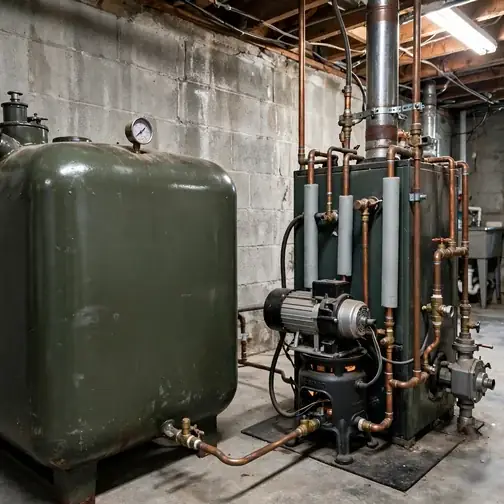
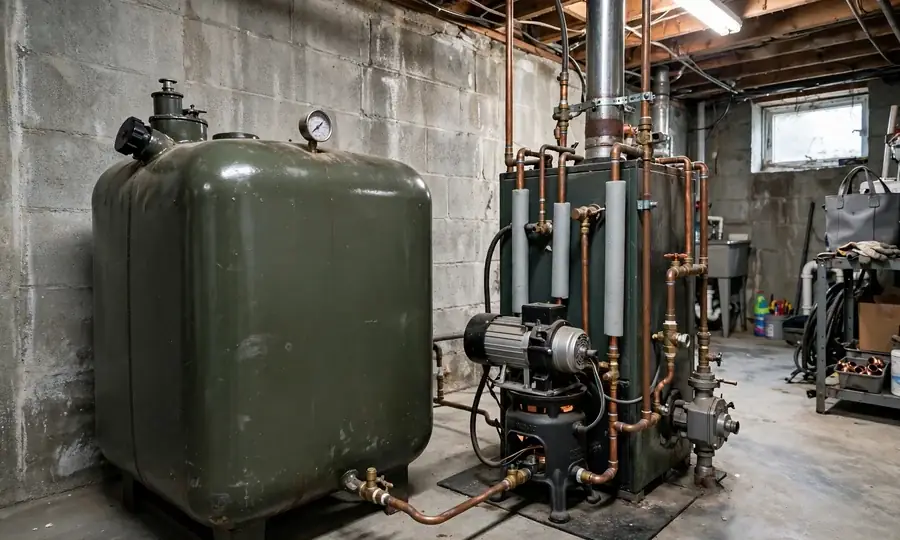
Home heating oil tank and oil burner in a basement utility room

Most Beverly oil tanks sit above ground in basements or garages — and salt air finds them. The corrosion pattern is consistent: rust at the bottom seams and legs first, then the fill and vent pipes where they pass through the house wall into the weather, then fittings and the gauge assembly. A tank does not fail all at once; it weeps, then drips, then leaks — and an oil leak in a basement is an environmental problem, not just a heating problem.

The walk-around takes two minutes and is worth doing every fall: look for rust flaking off the bottom or legs, damp spots or staining under the tank, weeping at fittings, and any oil smell that wasn’t there last season. Mention anything you find when you call — tank condition changes the dispatch, and a suspect tank gets a pro’s eyes before heating season, not during the first cold snap.

Storm-season fuel logistics

Nor’easters delay deliveries — plan the tank like you plan the storm.

Oil heat has a logistics layer gas doesn’t: the fuel has to arrive by truck. After a big nor’easter, delivery routes back up for days — driveways drifted shut, roads restricted, every low tank in the city ordering at once. The households that ride out storms comfortably are the ones that ordered before the storm, not during it.

The rule that works: don’t let the tank drop below a quarter in January and February, and schedule fills on the calendar rather than the gauge. Automatic delivery — where the dealer tracks your usage and tops you up — exists precisely for this; if you’re on will-call and you’ve been meaning to switch, a February storm is a persuasive argument. And if the tank does run dry, say so plainly on the call: a run-dry restart needs the filter checked and the line bled, and it’s a different dispatch than a dead burner.

Oil Boiler Repair in Beverly, MA

Frequently Asked Questions

Straight answers before you call.

01

My oil burner locked out and the red button is lit. Can I reset it myself?

Once — and only once. A single reset after a lockout is reasonable; if the burner fires and runs, watch it. If it locks out again, stop: repeated resets flood the combustion chamber with unburned fuel and can cause a puffback. The second lockout is the burner telling you to call.

02

How do I know if I’m just out of oil?

Read the tank gauge — if the needle sits at or below empty, that’s your answer. Other tells: the burner ran fine and quit without any change in sound, or the outage followed a stretch of heavy cold weather on a tank that was already low. Mention the gauge reading when you call; it changes the dispatch.

03

There’s an oil smell near the tank. How urgent is that?

More urgent than most people treat it. A faint, long-standing odor near an old tank is worth a scheduled look; a new or strengthening smell, visible dampness, or staining under the tank moves it up — it can mean a weeping fitting or a failing seam. Don’t wait for heating season to have it checked.

04

My tank is rusting at the bottom. Can it be repaired?

Surface rust on the legs or exterior can sometimes be addressed, but rust at the bottom seams — where the tank actually holds oil — is the warning sign that matters, and patching a failing seam is not a durable fix. Have a pro look at it before heating season; tank replacement is a planned job, tank failure is an emergency.

05

Why does my burner puff smoke on startup?

Delayed ignition — usually a worn nozzle spraying poorly, mis-set electrodes, or a chamber flooded by repeated resets. The unburned fuel ignites all at once instead of cleanly. It’s hard on the equipment and a soot-maker; don’t keep resetting through it, call for service.

06

How often does an oil burner need service?

Once a year, before heating season — nozzle, filter, electrodes, chamber inspection, and combustion check. Oil burners are mechanical and soot-producing by nature; skipping service is the most common reason a burner that ran fine in November locks out in January. Fall service is cheaper than February triage in every sense.

Oil-system reading

National pages for the same fuel family.

The national oil boiler repair page covers burner and fuel-system work in general terms, and steam boiler repair covers the one-pipe systems still found in Beverly’s oldest homes. Gas-heated streets are covered on the gas boiler page, and the city sits inside the Massachusetts coverage area.

Oil burner trouble in Beverly?

Call (888) 766-1474 — say your fuel first, read the tank gauge, and get connected to a local pro.

☎   Call (888) 766-1474